
Fire Truck Vinyl Graphics & Lettering
Custom Fire Truck Graphics Built for Visibility and Durability
Fire truck vinyl graphics do two jobs at once: they identify your department and they make a 30,000-pound apparatus visible on a dark highway shoulder. At Ryan Taylor Graphics, we craft custom fire truck lettering and decals that read clearly from a distance, survive years of road salt and pressure washing, and match the rest of your fleet seamlessly.
What a Fire Truck Graphics Package Usually Includes
Most departments order a package rather than a single decal, since consistency across the fleet is part of the point.
A typical build sheet for one apparatus includes:
- Door decals with the department name, city or district, and a Maltese cross or seal
- Unit numbers on the doors, roof, rear and sometimes the cab pillars
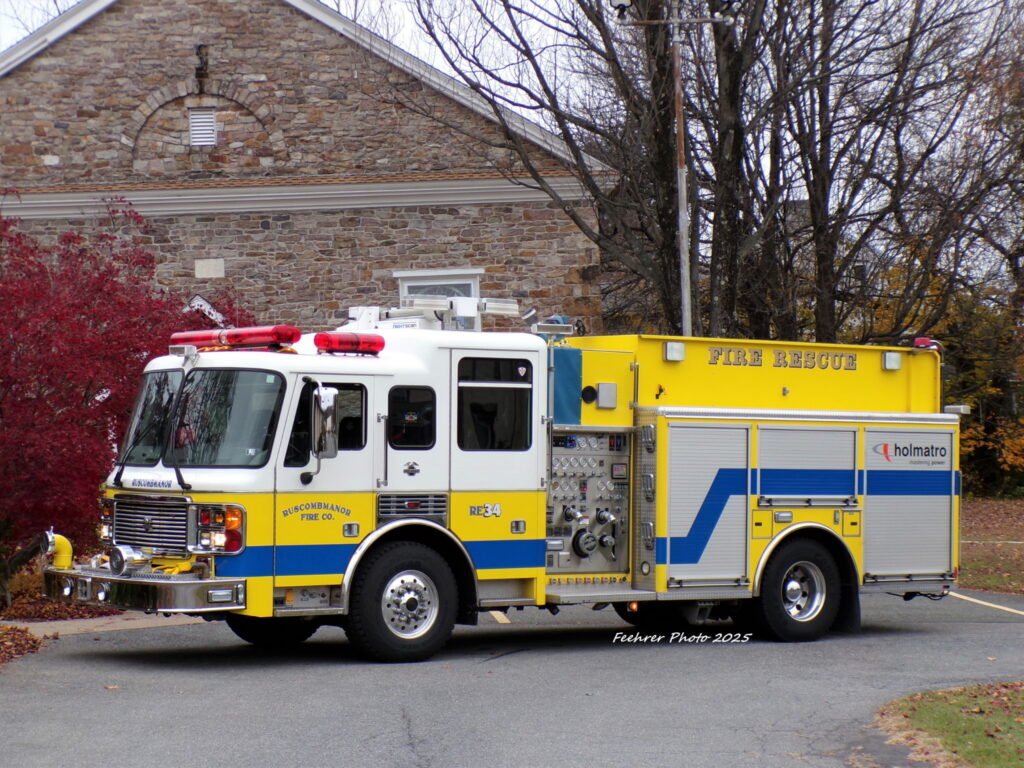
- Reflective side striping running the length of the cab and body
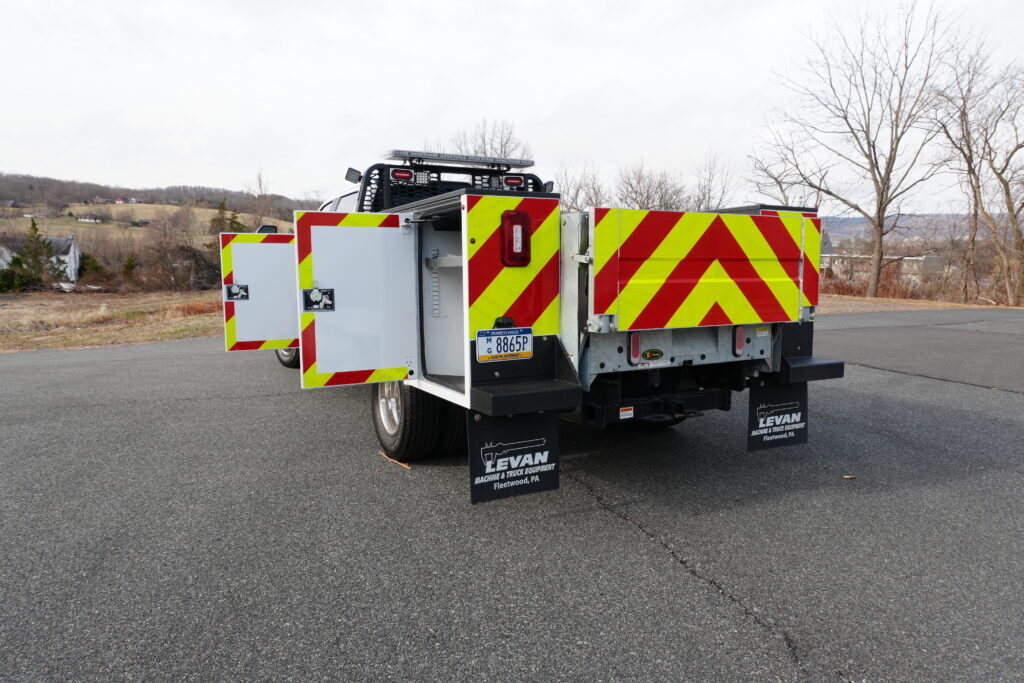
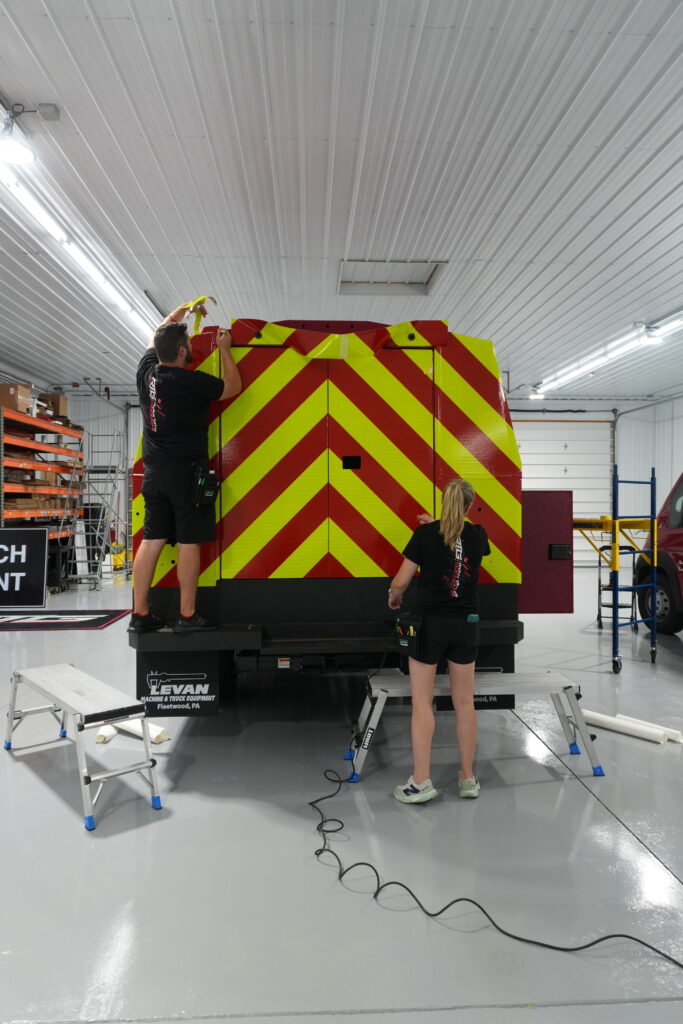
- Rear chevrons in alternating red and fluorescent yellow-green
- Gold leaf lettering or gold-look vinyl for department names and traditional scroll work
- Smaller callouts: GVW, radio designation, mutual aid identifiers, station numbers
Our emergency fleet graphics in Plymouth Meeting can be produced as cut vinyl, printed panels, or a combination when a design carries gradients and shadowing that plotted vinyl cannot reproduce.
Reflective Materials Are the Part That Matters Most
Retroreflective film is where fire truck graphics stop being decoration and start being safety equipment. NFPA 1901 has long called for retroreflective striping at least 4 inches wide covering a majority of the cab and body length on each side, plus a chevron pattern on the rear-facing vertical surface using stripes set at 45 degrees. Fluorescent yellow-green film reads earlier in low light than red alone, which is why most rear chevron layouts pair the two.
We build reflective work from cast retroreflective films rather than economy calendered stock. Cast film conforms over rivets, compartment seams and rolled edges, and it holds color for roughly 7 to 10 years on a vertical surface instead of fading and shrinking in 3.
Lettering, Fonts and Gold Leaf Tradition
Fire truck lettering has its own visual vocabulary: condensed slab serifs, hand-drawn scrolls, drop shadows with a bevel, and gold leaf outlined in black or maroon. Genuine 23-karat gold leaf is still used on hose beds and cab doors, though most departments now specify a metallic gold vinyl that mimics the look at a fraction of the cost and holds up better to washing.
Legibility comes down to letter height. A practical rule for vehicle graphics is 1 inch of cap height per 10 feet of intended reading distance, so a 6-inch unit number reads at roughly 60 feet. Rear-facing numbers usually run larger than door lettering for exactly that reason.
Matching an Existing Fleet or Starting Fresh
Two situations come up constantly. Either a department bought a new engine and needs the graphics to match six trucks lettered years ago by a shop that no longer exists, or leadership wants to redesign the whole look.
We handle both: we can reverse-engineer existing custom fire truck lettering from photographs and measurements, then rebuild it as clean vector art, or start from a blank cab drawing and develop a fresh identity you can carry across engines, brush trucks, command vehicles and squad cars.
Cost and Timeline
Pricing varies with apparatus size and how much of the surface is covered. Typical ranges we see:
- Door decals and unit numbers only: $400 to $900 per truck
- Reflective striping plus rear chevrons: $1,200 to $3,000
- Full identity package with gold-style lettering and scrolls: $2,500 to $5,500
- Printed partial or full wrap on a command or utility vehicle: $3,000 to $7,000
Design and proofing usually takes 1 to 2 weeks with department review built in. Installation runs 1 to 3 days depending on complexity, and we schedule around your staffing so the apparatus is out of service as briefly as possible.
Keeping Firetruck Decals Looking New
Reflective film fails early for predictable reasons, most of them wash-related. Hand wash with a mild automotive soap, keep pressure washer tips at least 12 inches back and under 1,500 psi, and angle spray away from decal edges rather than straight into them. Avoid abrasive polishes and solvent-based degreasers over printed panels.
Frequently Asked Questions: Fire Truck Vinyl Graphics & Lettering
Cast vinyl and cast retroreflective films typically last 7 to 10 years outdoors, while cheaper calendered vinyl often starts cracking or lifting at 3 to 5. Wash method and how much the apparatus sits in direct sun make a real difference in that spread.
Yes, NFPA apparatus standards have required a retroreflective chevron pattern on the rear-facing vertical surface since the 2009 edition, generally using 6-inch alternating stripes at 45 degrees. Many states and departments also add side striping requirements beyond the minimum.
Yes. With clear photos, a few measurements and ideally the original color codes, we can recreate existing emergency fleet graphics in King of Prussia closely enough that the new engine parks next to a 12-year-old one without looking out of place.
Reflective film performs the same regardless of the surface color underneath, since the film itself returns light to its source. Contrast matters for daytime readability, though, so we test layouts against your paint scheme before proofing.
Get In Touch
Letter Your Next Emergency Fleet
Send us photos of your current fleet and the specs on the new truck, and we will put together a design proof with reflective striping options and firm pricing. Ryan Taylor Graphics works directly with response teams on layout, production and installation scheduling.